Your involvement means: 40 US cars worth of emissions, averted monthly1 6 steady jobs, with paths to ownership Systemic solutions addressed collectively
Incommon Capital funds collectives of projects that regenerate each other environmentally, socially, and economically.
Note: We are currently operating under the IRS 501(c)(3) gross revenue exemption for small organizations. We do not yet hold an IRS determination letter but intend to formally apply as our funding grows. Consequently, we cannot provide permanent assurance of tax deductibility for your contribution.
The Story
Benefits in perpetuity
Zainab Imam leads Zimaj Craft Ltd., a Nigerian business turning agricultural and wood processing waste into cooking fuel. The team needs support to make the waste-to-energy model commercially viable. Selling a wholesale volume of its charcoal (enough for about 43 families3) saves about a hundred woodland forest trees2 every month, by using fifteen tons of rice husk and sawdust instead, which otherwise would have rot or burned. They are addressing negative externalities from completely unrelated rice and timber industries. These are systemic problems; they destabilize our world with nobody held accountable. Funding will help Zimaj Craft scale its operation so the team can continue addressing these externalities month after month. Funding delivers ecological and social benefit that is economically self-sustaining.
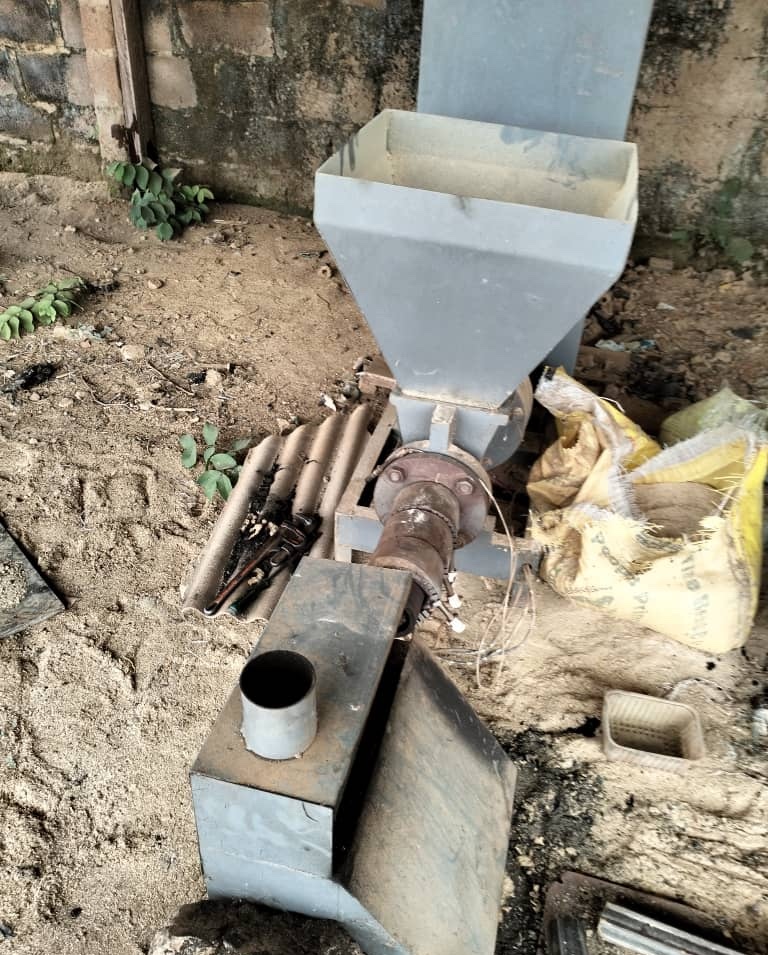
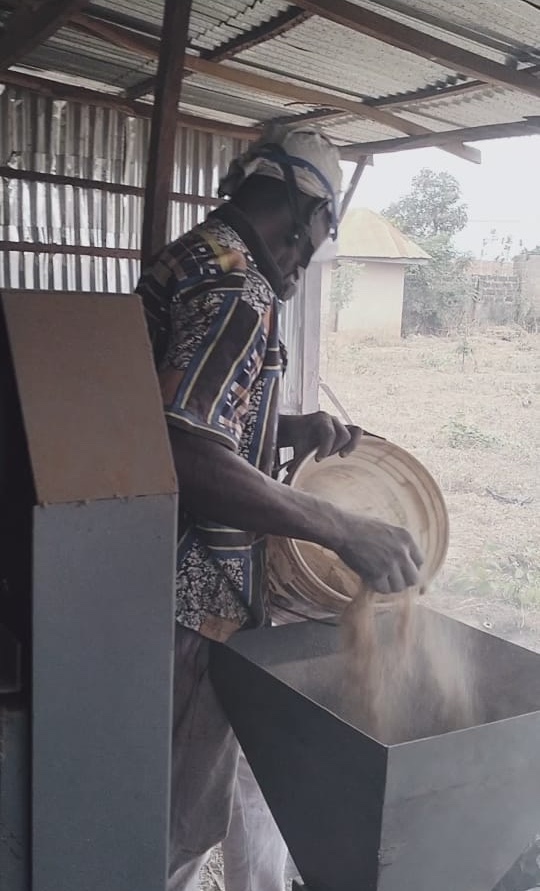
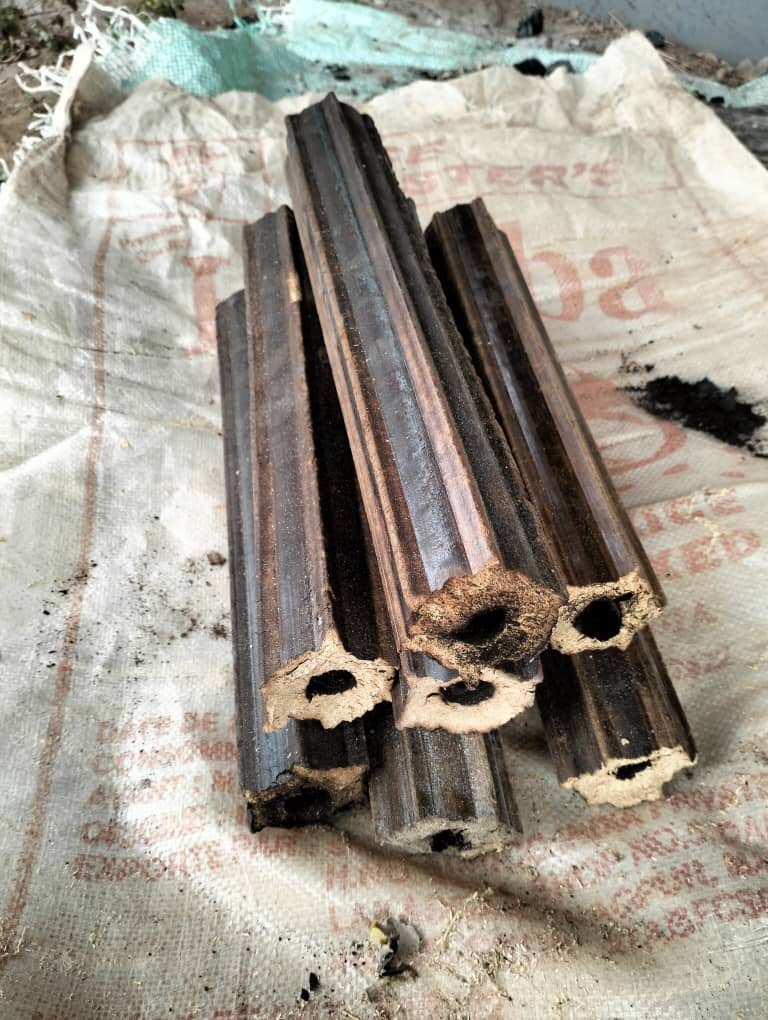
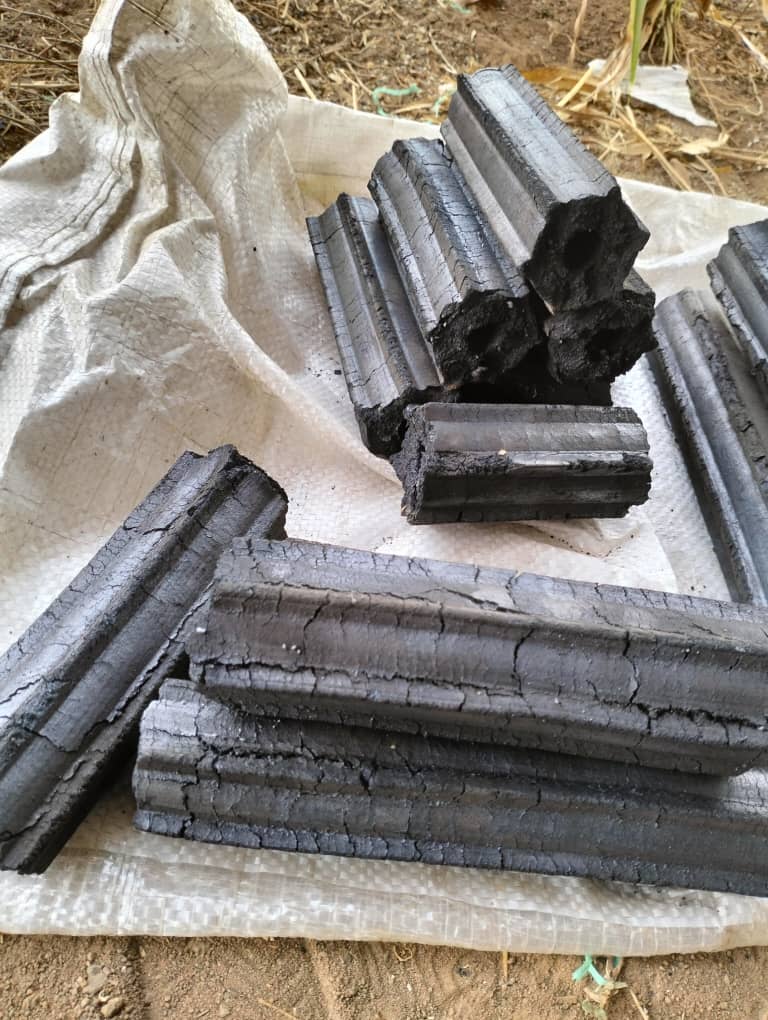
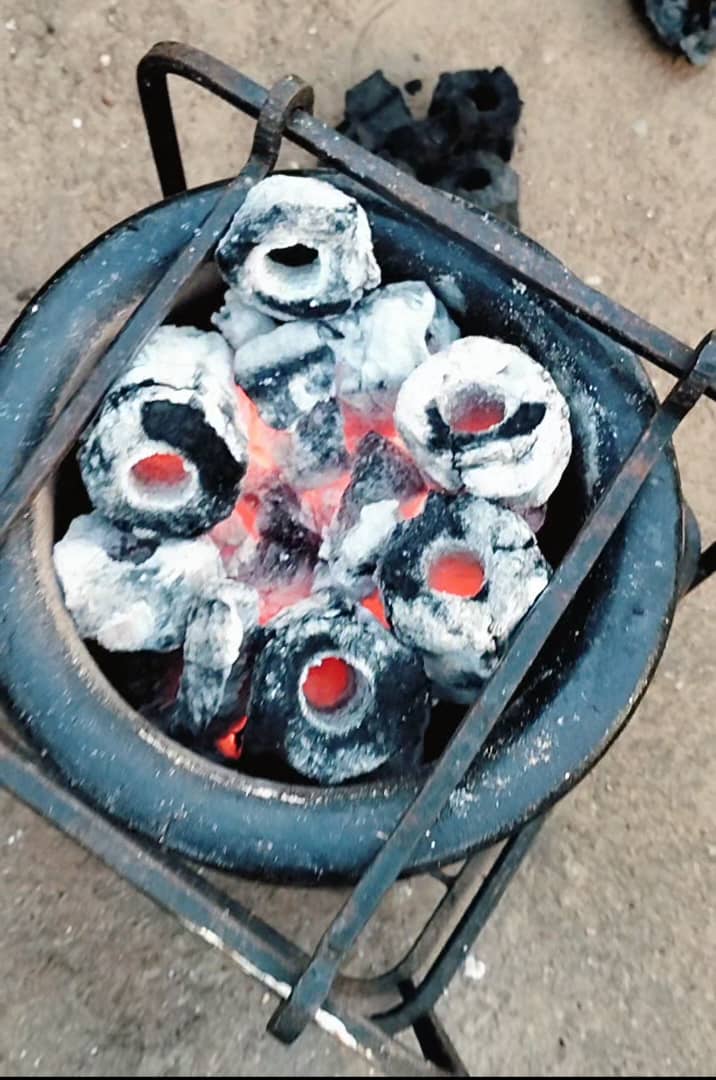
Extruder setupWorker feeding the extruderExtruded wood formsFinished rice charcoalRice charcoal in use
Emissions are Inset and Offset
In Nigeria's home cooking ecosystem, charcoal from savannah woodlands and forests is the main fuel source for 9% of households3. Price conscious home cooks, markets, and charcoal producers depend on the scale of the current system.
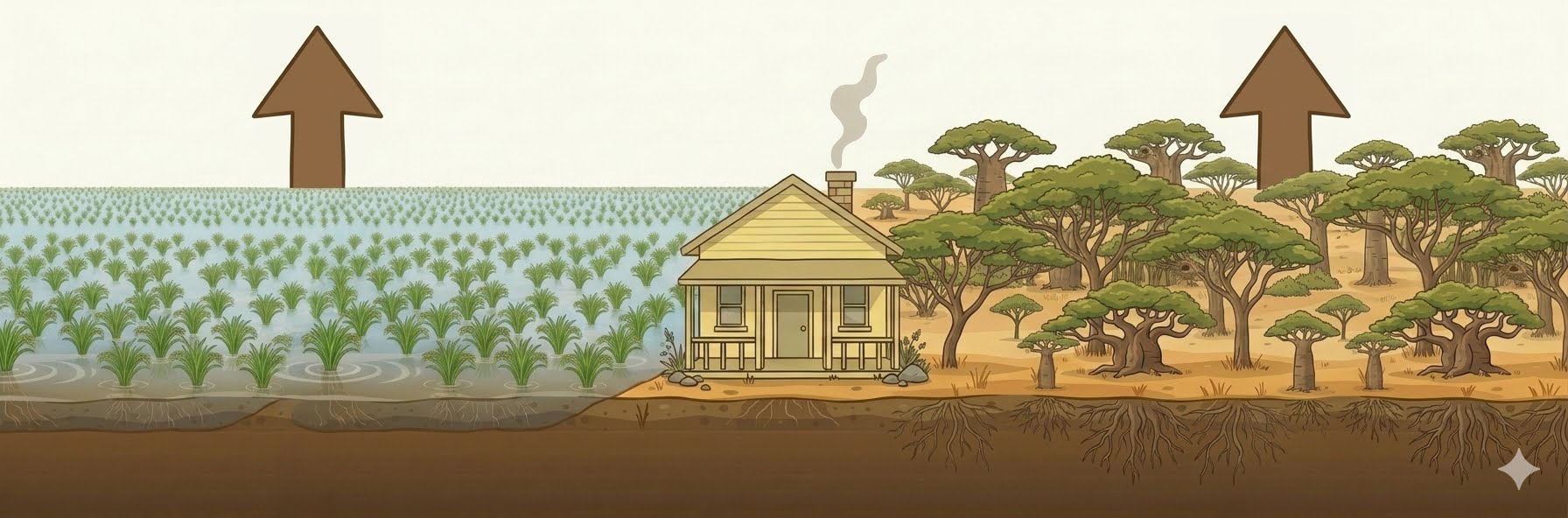
A charcoal-fired home-cooked meal in Nigeria hides a double-emission baseline that shoppers, markets, and producers are mostly unaware of: The 90kg of charcoal used by a typical household in a month generates 650 kg of CO2e4, from 1-2 trees, often taken illegally from savannah woodlands that hold an average of 66 years of accumulated carbon from their growth2 (see the graphic below). Additionally, the rice industry generally leaves their rice husk to rot after milling, releasing the equivalent of 200 kg of CO2e emissions from carbon dioxide and methane5 for the quantities Zainab would use for a household's monthly charcoal, while the timber industry burns its sawdust outright, emitting another 450kg CO2e5, for each household's share of charcoal use. These externalities are from unrelated industries, but from the same ecosystem, and Zainab and Incommon Capital are working on economically viable ways to reduce them.
Zainab's retort charcoal process releases 150 kg CO2e less greenhouse gases per month per household than a pit kiln, and her sourcing mitigates externalities from adjacent businesses; eliminating emissions from decomposing rice husk and burning sawdust acts like a carbon credit of 650 kg CO2e for each household that cooks with rice husk charcoal, every month5. The combined total emissions reduction from her business comes to 800 kg CO2e monthly per household6, a number which is 120% of the forest charcoal footprint (see the graphic below), and comparable to nearly a month's worth of driving for an average car in the United States1.
She has found that mixing sawdust and rice husk stabilizes product performance while also increasing supply and bargaining power.
She has prototyped a small drying machine that validates the stability achievable once she obtains a full sized and functional version.
She won a grant and completed an incubation program through All On Energy, which provided exploratory capital and training for her rice charcoal business idea.
She completed the RegenIntel Fellowship program, including studies of regenerative climate solutions and systems thinking.
Her product testing shows that rice charcoal from her controlled process burns more evenly and lasts longer than charcoal made from wood.
Even with funding support, Zimaj Craft will face economic challenges imposed by buyers, suppliers, and competitors, when what we want is a company with the scope to reinvest into more socio-ecological benefits. We want agile development on social and environmental levers, not just economic ones. Zainab knows the importance of finding partners that are supportive of her vision, and Incommon Capital is equipping her to lead the Craft Cookfire collective to pool investments among her partners. Incommon Capital recruits businesses and deploys funds into collectives that address interconnected problems at the system level. When the whole ecosystem is involved, it becomes a commons to be managed instead of a resource to be harvested.
Part grant, part investment
Incommon Capital Corporation is a newly formed nonprofit operating in accordance with IRS guidelines for small charitable organizations in the United States. Under these small-scale rules, donations are tax deducible, but we have not yet been reviewed as a potential large-scale organization. Donors concerned about tax deductibility should consult their tax advisors. Funds raised will be used as follows:
This initial capital, after deducting platform and transaction fees, is a restricted grant to pay for rice husk, sawdust, and other costs to produce the inventories required for wholesale volumes, and is pre-approved by Incommon Capital in order to achieve the emissions and employment benefits of rice husk charcoal over forest charcoal.
Funds raised beyond the restricted grant are held in Incommon Capital's general fund, deployed at our discretion to fund Program Related Investments (PRI), as well as to absorb program costs, and maintain reserves that protect our charitable capital from market risks. An investment in the Craft Cookfire collective, conditional on achieving the emissions and employment targets of the restricted grant, will enable the purchase of a machine for Zimaj Craft Ltd. to dry the rice husk in 3 days, down from the standard, weather-dependent, 10-20 day sun-drying process.
Program-Related Investments (PRI) by Incommon Capital are made in the form of a purchase of a future share of revenues. The Craft Cookfire collective will pay a variable 8% share of quarterly project revenues until the sum of its payments reaches 1.2x the revenue share purchase price, marking the end of our investment. Revenue-sharing, different from a fixed rate loan or an equity investment, ensures that the collective maintains its independence and is able to adapt to market conditions. Contributions to this campaign are a charitable donation to Incommon Capital, and do not yield financial returns. Revenue sharing receipts from the collective are recycled back into our general fund for future charitable investments, possibly including:
a rice husk charcoal distribution and export business focused on regenerative principles,
a dry warehouse for millers to store rice husk and sawdust, conditional on deforestation avoidance,
a transportation and security business for high risk rice husk charcoal commuters, and
solar energy for rice husk charcoal manufacturing.
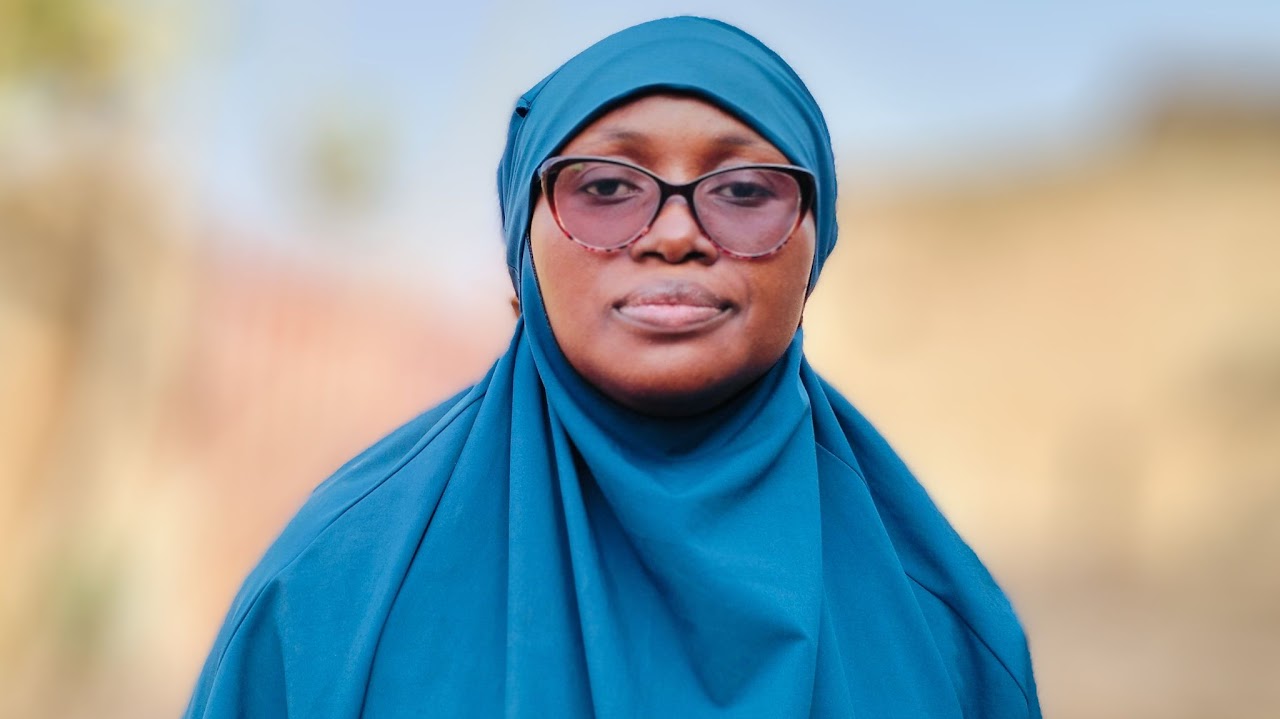
Zainab is an Architect on a mission to design a resilient Africa. As the Founder of Zimaj Craft, she leads an integrated firm that bridges the gap between the built environment and sustainable energy. Based in Ilorin, Kwara State, Nigeria, Zimaj Craft operates three distinct but interconnected pillars: Architectural Design, specializing in bioclimatic, energy-efficient spaces and high-fidelity 3D visualization for residential and institutional projects; Clean Energy (Zecochar & Zecowood), engineering industrial-grade, zero-deforestation biomass fuels from agricultural waste to power the homes and industries we build; and The Sustainability Lab (Climate Heroes & Earthy Ink), driving environmental literacy through storytelling, including her children's book, "Climate Heroes," while creating minimalist interior art and sustainable decor from natural pigments.
As a RegenIntel Fellow, Zainab applies regenerative design principles to solve the climate-energy nexus in Nigeria. Her work is deeply rooted in the Muslim Women Intellectual Development framework, where she leads the intersection of faith, gender-inclusive leadership, and sustainable innovation. She doesn't just build structures; she builds systems that restore the environment, educate the next generation, and empower the community.
Incommon Capital
At Incommon Capital, our purpose is to drive social and environmental benefits that are economically self-sustaining. We operate as a charity that conducts educational and scientific activities for founders and collectives who commit to charitable outcomes in their value chain. We identify, incubate, mentor, finance, and monitor in order to achieve these outcomes.
1.The average US automobile driver is responsible for the equivalent of about 700 kg CO2e from burning gasoline, plus about 150 kg CO2e from the extraction, production, and distribution of the gasoline, for a total of over 850 kg CO2e of emissions per month. Since switching from forest charcoal to rice husk charcoal saves around 800 kg CO2e of greenhouse gas emissions per household (see note 6), every household switching to rice husk charcoal is nearly as effective as removing 1 US car from the roads. Zimaj Craft's monthly batches of 3,850 kg of charcoal serve the monthly needs of 43 families compared to wood charcoal, eliminating the equivalent of more than 40 US cars from the roads.
2.Harvesting the 23,100 kg of wood required for a 3,850kg batch of charcoal, from the savannah woodlands of Kwara state, would require 50 to 150 trees, including several larger hardwoods like the African Birch, with around 500 kg of usable wood per tree, and dozens of smaller trees like the African Ebony, at 140 kg per tree, undoing an average of 66 years of carbon sequestration. By comparison, rice plants reach their maturity in a single growing season of about 4 months.
3.9.3% of households in Nigeria used charcoal as their primary cooking fuel in 2024, compared to 53.6% who used firewood, and 29.2% who used liquified petroleum gas. Those who use charcoal may also use it for heating water for cleaning and bathing, for a total usage of about 90 kg per household per month.
4.The greenhouse gas emissions (including Carbon Monoxide, Carbon Dioxide, and Methane) from carbonizing the wood in a pit kiln for one household's monthly needs (see note 3), are about 390 kg CO2e, and burning the charcoal for cooking produces another 250 kg CO2e. Felling, transporting, and preparing the wood that produces the charcoal comes from the diesel fuel used by saws, transportation, and processing and will add up to 10 kg CO2e during sourcing, for a total of 650 kg CO2e driven by each household, each month.
5.Rice husk contains about 40% carbon, and when it is abandoned after milling, the emissions it generates if not upcycled into charcoal can be calculated at about 130kg CO2e of methane and 70kg Carbon Dioxide, for 200 kg CO2e combined for every 90 kg of charcoal that a household would use in a month (see note 3). If it is dumped on a river bank instead of a field, the emissions could be nearly double that. The sawdust in each 90kg of her charcoal would have emitted about 450 kg CO2e when burned by the mill. Combined, these externalities from the rice and wood industries cause 650 kg CO2e emissions that would be mitigated if they were instead upcycled for charcoal production.
6.Even if the rice husk used by Zimaj Craft produced the same emissions while carbonizing and burning as the wood charcoal process does, it would drive 650 kg CO2e of emissions offsets from rice husk decomposition and sawdust burning (see note 5) for each household's monthly charcoal usage (see note 3). Zimaj Craft also uses a retort process which reduces emissions directly by 140 kg CO2e per household per month, and doesn't drive the wood sourcing emissions of 10 kg CO2e (see note 4), since those emissions are counted in the rice and wood milling industries, and she only uses their waste product in hers. Total emissions reduction from offsets and insets come to 800 kg CO2e per month per household.